
Last updated August 25, 2026
Free in-home measure and quote - PGT, CGI and CWS impact lines compared on your actual openings, style by style
Sliding glass doors
Impact garage doorsPGTCGI
 Before
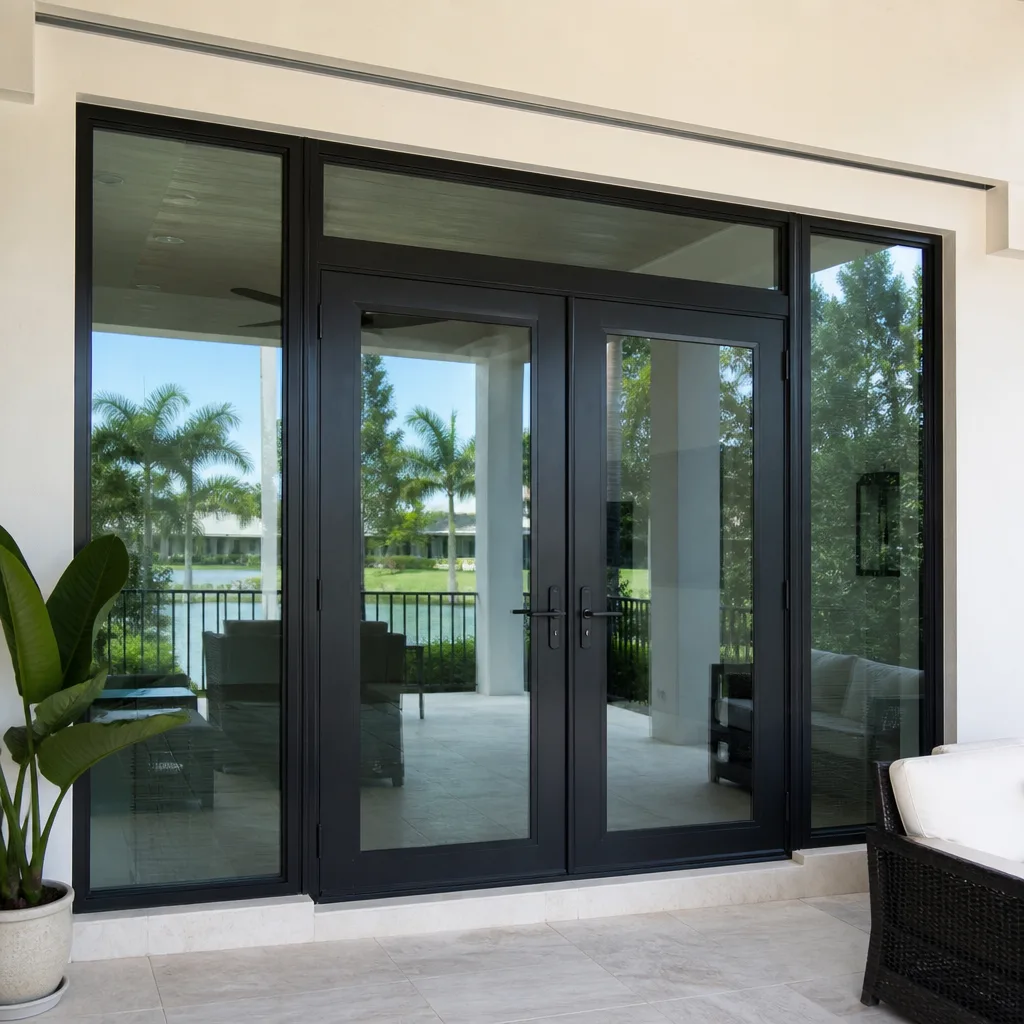 After
After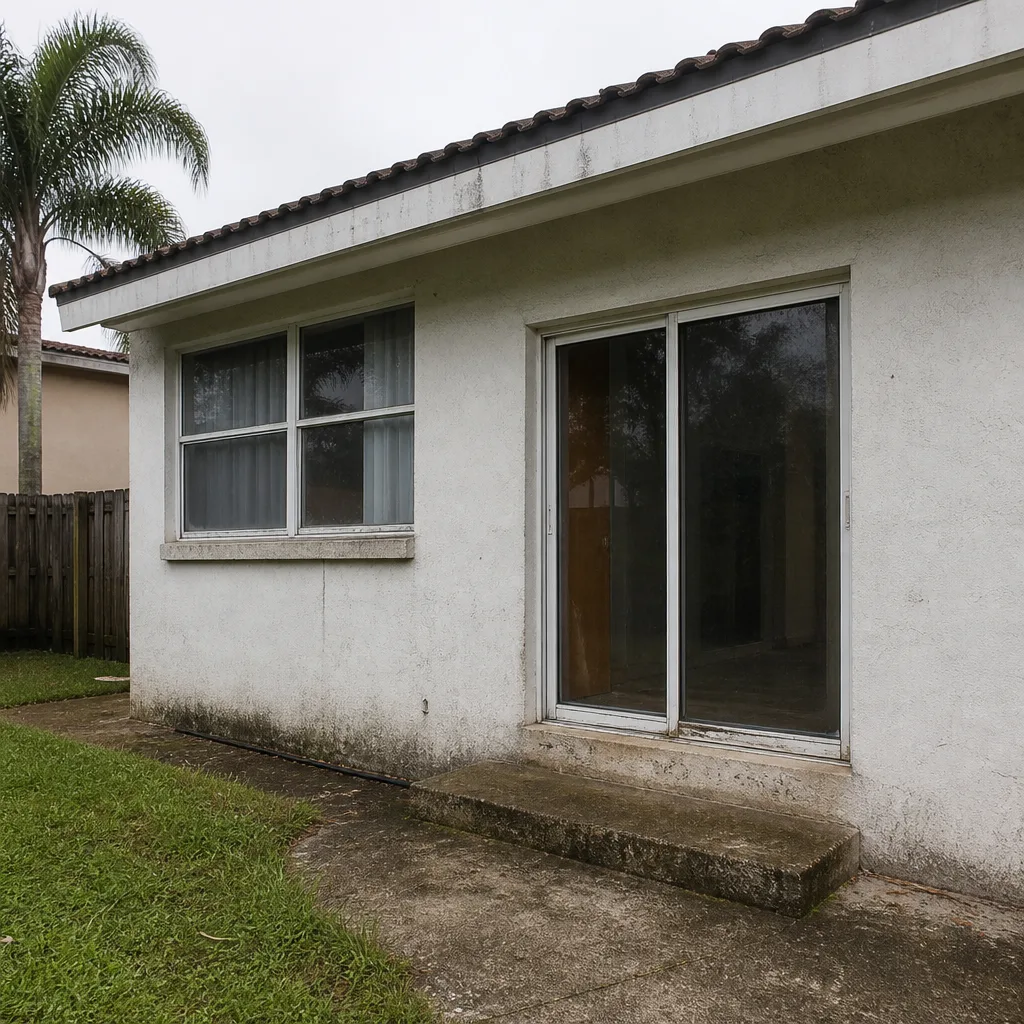 Before
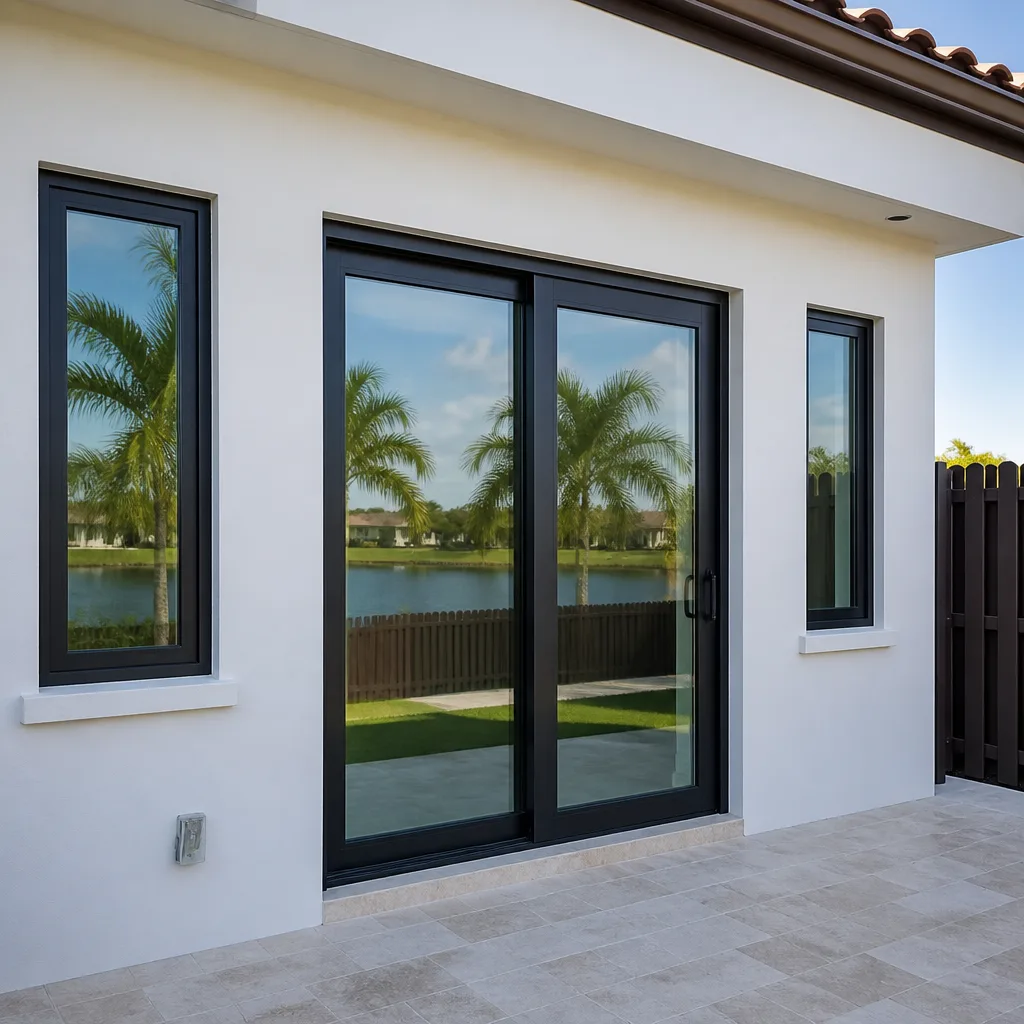 After
After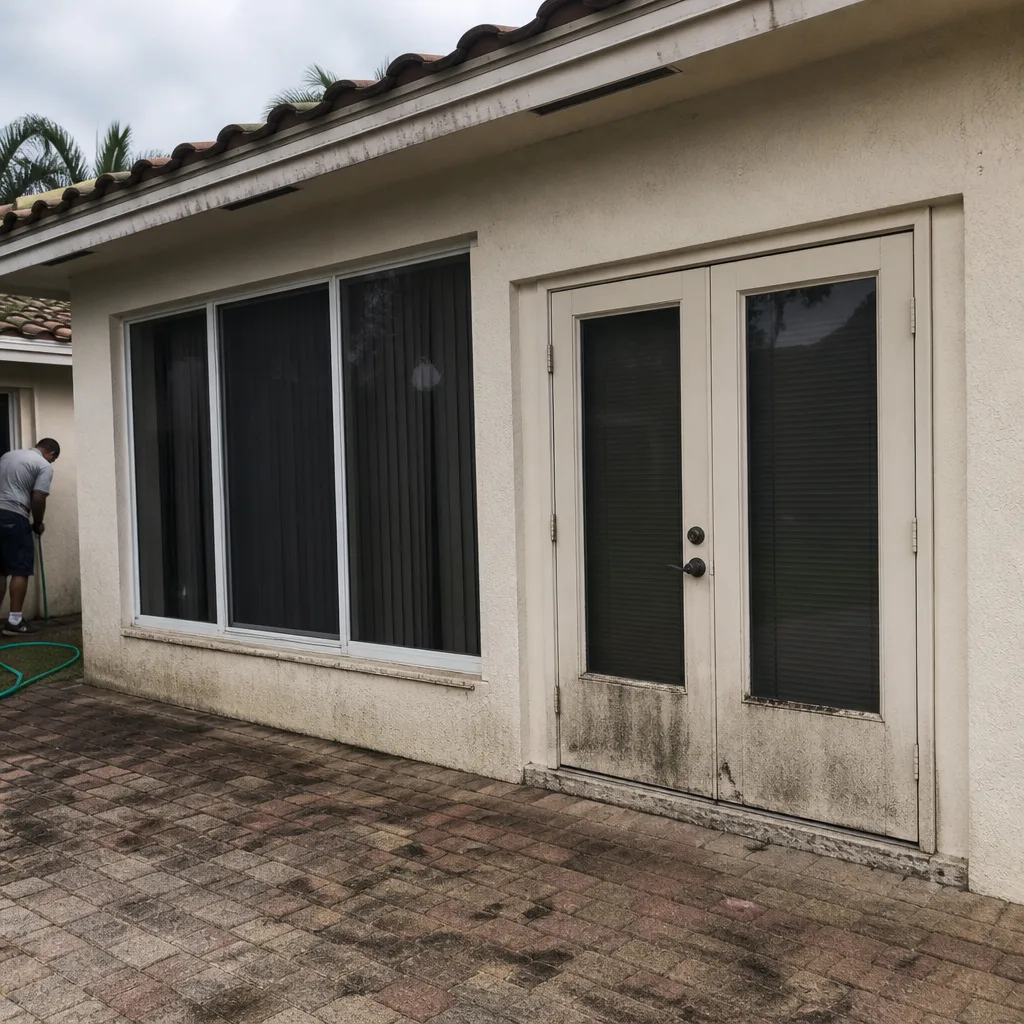 Before
 After
AfterWindows & Doors Warning Signs: A Doral Homeowner’s Reference Guide
Most Doral homeowners replace windows and doors seven to ten years later than they should. Not because they don’t notice the problem, but because the early warning signs are quiet ones: a latch that needs a firmer push, a room that never quite cools, a thin whistle on windy afternoons. By the time the signs get loud, the repair bill has usually doubled. This guide walks through the warning signs we’ve learned to read in Doral’s specific climate, what they mean, what they cost to fix, and which ones you can safely monitor for another season.
Quick Answer
The windows and doors in a Doral home usually first show failure through one of five signs: condensation or fog between glass panes, difficulty opening or closing, visible daylight around the frame, rising energy bills without a change in usage, and water staining or soft spots near the sill. Any one of these means the seal, the installation, or the structure has begun to fail, and in Doral’s heat and humidity, small failures widen fast.
Table of Contents
- Fogged or Cloudy Glass: The Silent Seal Failure
- Windows and Doors That Stick, Drag, or Won’t Latch
- Daylight You Can See and Drafts You Can Feel
- Water Stains, Soft Sills, and the Mold Question
- Rising Energy Bills: Reading Your Windows Like a Meter
- Frame Rot, Warping, and What Doral’s Humidity Does to Wood
- Glass Chips, Cracks, and Impact Damage
- Common Mistakes to Avoid
- When to Call a Professional
- Frequently Asked Questions
- The Bottom Line
Fogged or Cloudy Glass: The Silent Seal Failure
Fog between the panes of a double-pane window means the insulating glass unit, often called the IGU, has lost its seal. The desiccant material inside the spacer bar, which absorbs moisture during manufacturing, becomes saturated and can no longer do its job. From that point forward, the window has lost most of its insulating value. In Doral, where July afternoons routinely sit in the low 90s with humidity above 70 percent, a failed seal doesn’t just fog the view; it forces the air conditioner to work against a window that has effectively become single-pane glass.
This is the most common window failure we replace in Doral, and it’s also the easiest to misdiagnose. Surface condensation on the room side of the glass is not a seal failure; it’s a humidity issue inside the home. Condensation you cannot wipe away from either side is the seal. Here’s the distinction that matters:
- Interior surface moisture: Condensation on the room side of the glass, usually in the morning. This is an indoor humidity problem, not a window defect. A dehumidifier or better bathroom ventilation often solves it.
- Between the panes: Fog, haze, or water droplets trapped inside the glass unit. The seal has failed. Wiping does nothing because the moisture is sealed inside.
- Exterior surface moisture: Condensation on the outside of the glass. This actually indicates the window is insulating well. The outer pane stays cool enough for overnight humidity to condense on it, the same way it does on a car’s windshield.
Once a seal fails, there is no practical repair that restores the original clarity and insulation. The proper fix is replacing the IGU, and in many Doral homes with windows that are 15 to 20 years old, it’s often more sensible to replace the full window, especially if the frame shows wear or the original install was questionable. A glass-only replacement runs roughly $180 to $350 per unit in Doral depending on size and glass type. A full window replacement typically runs $600 to $1,400 per opening for a quality vinyl or aluminum frame with a reputable manufacturer line like Andersen or Pella.
In our experience, a fogged window in one room usually means its siblings are not far behind. The seals on windows manufactured in the same batch tend to fail within a few years of each other. If the home was built in a single phase, budget for the group, not the one.
Windows and Doors That Stick, Drag, or Won’t Latch
A door that drags across the frame in July but swings freely in January is not a mystery, and it’s not a reason to sand the door. It’s a sign that the structure or the installation has shifted with Doral’s seasonal moisture cycle. South Florida’s wet season saturates the ground and swells framing lumber; the dry season releases it. Over twenty or thirty years, that cycle works screws loose, settles foundations by fractions of an inch, and gradually twists door frames out of square.
Here’s how to read the specific symptom:
- The door binds at the top corner on the latch side. The frame has settled or the hinge screws have loosened. A hinge tightening may buy a season. The underlying settlement remains.
- The door drags across the full bottom. The threshold is too high, the slab has swollen, or the floor has settled. In Doral, humidity swelling is common on wood slabs that were never properly sealed on all six sides.
- The window requires two hands to open or won’t stay up. The balance system is failing. On older single-hung windows, this means worn spiral balances or broken springs. On newer windows, it can indicate the frame has twisted enough to bind the sash.
- The latch only catches when you lean your weight into the door. The alignment between the strike plate and the latch bolt has shifted. This is a security issue, not just a convenience one.
A quick note on safety: modern double-hung windows with failing balances can drop suddenly. A full sash on a large Doral picture window or double-hung can weigh 25 to 50 pounds or more; that’s enough to break fingers. If a window won’t stay up, prop it securely and call someone who understands the counterweight or spring system rather than improvising with a stick.
The fix depends on the root cause. A simple hinge adjustment or balance replacement runs $85 to $200 per window in Doral. A door that needs the frame re-squared and the slab re-hung usually runs $150 to $400. If the underlying issue is foundation settlement, which shows up as cracks in the drywall corners and a door frame that is visibly out of square, the right call is a structural assessment before any window or door work begins. New windows installed into a moving frame will fail the same way the old ones did, just more expensively.
Daylight You Can See and Drafts You Can Feel
Stand inside the house on a bright afternoon with the lights off. Look at the perimeter of every window and door. If you can see daylight through any gap, the opening is not sealed. It’s that simple. In Doral’s climate, a visible light gap means three things are moving through that opening: conditioned air leaving, humid outside air entering, and insects following the moisture.
What causes these gaps? Often, it’s the weatherstripping. On a door, the sweep on the bottom wears flat after a decade. On a window, the bulb seal or pile weatherstrip compresses and loses its shape. But sometimes the gap is not the weatherstripping at all; it’s the frame itself, installed out of square or pulled out of square by settlement. If the gap is wider at the top than the bottom, that’s the frame talking to you.
Here’s a practical test for Doral homeowners, one that takes five minutes and costs nothing:
- Close and latch the window or door.
- Hold a plain sheet of paper in the gap and try to slide it along the seal. If it slides freely, the seal is not making contact.
- On a breezy day, wet your hand and hold it near the perimeter. The evaporative cooling will find drafts faster than any meter.
- At night, have someone shine a flashlight from outside while you watch the edges from inside. Gaps show up as light lines.
In Doral, air sealing is not a comfort luxury; it’s a moisture control strategy. Humid air that leaks into an air-conditioned home condenses on cool surfaces, feeds mold, and forces the HVAC system to remove water the house should never have taken in. A 1/8-inch gap at the bottom of an exterior door is equivalent to leaving a small window cracked open year-round, except you can’t see it, so you forget it’s there.
Weatherstripping replacement on a standard door usually runs $80 to $200. Re-hanging a door or re-setting a window to close a structural gap runs higher, $300 to $800 depending on how far out of true the opening is. The old-timer’s standard applies: if the pane is not true, the job is not done. A weatherstrip slapped over a twisted frame is a band-aid that will fail by next hurricane season.
Water Stains, Soft Sills, and the Mold Question
Water stains around a window or door are never cosmetic. They are the evidence trail of water finding a path it should not have. In Doral, where the rainy season delivers an average of 7 to 9 inches of rain per month from June through September, a small leak does not stay small. It reveals itself after the first serious storm, then widens with each one after.
The question is where the water is coming from. There are four usual suspects:
- Failed or missing flashing at the top of the opening. Water gets behind the siding or stucco and runs down the inside of the wall, showing up as a stain below the window, not above it.
- Poorly sloped sills. If the sill does not pitch outward, water pools against the frame and wicks into the wall. This is common in older Doral homes where code required less slope than current practices.
- Failed caulk or sealant at the perimeter. Caulk lasts 5 to 10 years in South Florida sun. After that, it cracks, pulls away, and becomes a water inlet.
- Interior condensation running down to the sill. If the room side of the glass sweats heavily, the water has to go somewhere, and the sill absorbs it.
If a sill feels soft when pressed with a thumbnail, rot is present. If the drywall below a window crumbles when touched, the leak has been active for a while. The moment mold enters the picture, which in this climate can be within 48 hours of a leak, the repair scope expands from the window to the wall cavity. What could have been a $400 seal and flashing repair becomes a multi-thousand-dollar remediation.
In Doral, where moisture is relentless, we advise homeowners to check window and door perimeters twice a year: once before the rainy season in May and once after the first named storm. Look for cracked caulk, peeling paint, staining, and anything that looks like a trail of water. The half-hour you spend looking is cheaper than any repair you will ever schedule.
Rising Energy Bills: Reading Your Windows Like a Meter
When a Doral homeowner tells us their power bill has crept up without a change in thermostat settings, we start with the windows and doors. Single-pane windows, failed double-pane seals, and leaking frames are among the top three contributors to high cooling loads in South Florida homes, behind only the HVAC system’s own efficiency and attic insulation levels.
Here’s what that looks like in practical terms. A window with a failed seal has lost the insulating air gap that made it energy-efficient. Its performance drops to roughly the level of single-pane glass. A single-pane window in Doral’s climate allows heat to enter the home at roughly twice the rate of a functioning double-pane unit. Multiply that across ten or twelve windows, add a leaky sliding glass door, and the air conditioner is now fighting a losing battle every afternoon from 2 to 6 p.m.
You don’t need a blower-door test to sense this. Here’s the reading we suggest for Doral homeowners:
- Compare bills year over year, not month to month. FPL rates change. Your usage habits change. What matters is whether this July cost more than last July with the same thermostat setting and roughly the same weather.
- Walk the perimeter at 3 p.m. on a hot day. Put your hand flat against the glass. If the inside pane is hot to the touch, that heat is radiating into the room. If it’s merely warm, the glass is doing its job.
- Check for warm air movement near the floor. Hot air leaks in at the bottom of doors and out at the top of windows. The air you feel at ankle height on a closed door is conditioned air’s replacement.
Replacing the windows in a typical Doral home, a 3-bedroom built in the 1990s with single-pane or failed-double-pane glass, typically runs $8,000 to $18,000 depending on count, material, and manufacturer line. The energy savings alone rarely justify the full cost on a fast timeline; honest math says the payback takes 8 to 15 years. What does justify it is the combination: energy savings, humidity control, noise reduction, resale value, and the elimination of the slow failures that will otherwise cost you year after year. A square deal means we show you that math on paper before you sign anything.
Frame Rot, Warping, and What Doral’s Humidity Does to Wood
Wood windows and doors in Doral live a hard life. The sun beats on the exterior, the humidity swells the fibers, the rain wets them, and the dry season shrinks them again. Over twenty years of this cycle, wood frames can rot from the inside out, warp, or simply degrade to the point where they no longer hold a piece of glass securely. This is not a reflection of the homeowner’s care; it’s what the Doral climate does to an organic material that was never well suited to it.
The rot in a wood frame is often invisible until it’s advanced. It starts in the bottom corners where water sits, or behind the stucco where the flashing failed. By the time you see peeling paint, a soft spot, or a sagging sash, the wood behind it is usually further gone than the visible surface suggests.
Signs specific to wood frames in Doral:
- Paint that bubbles or peels in the bottom corners while the rest of the frame looks fine. Water is wicking up from below.
- A sill that feels spongy under pressure or shows what looks like miniature wood shavings; that’s termite or carpenter ant frass, and in Doral, wood with a moisture problem attracts both.
- A sash that’s visibly out of square within the frame, with wider gaps at the top on one side and the bottom on the other.
- A musty smell near the window that persists even after the room is cleaned. That’s decay, not dirt.
In our experience, the Doral homeowner with wood windows gets the most honest advice when we say this plainly: if rot is present in more than one window, the best long-term move is usually replacement with a material built for this climate, not piecemeal repair. Vinyl and aluminum frames do not rot. Quality vinyl from manufacturers like Milgard or Marvin’s fiberglass line, specified correctly for South Florida’s wind and water loads, will outlast the original wood without the maintenance treadmill. That’s a conversation we have side by side, on paper, with both options priced out so the homeowner makes the call with full information.
Glass Chips, Cracks, and Impact Damage
Doral sits in a high-velocity hurricane zone. If a home was built or renovated after 2002, its windows and doors should be impact-rated, meaning the glass is laminated and tested to withstand windborne debris. A small chip in the outer pane of an impact window is not necessarily an emergency; the inner layer of polyvinyl butyral holds the glass together and the window continues to protect the home. But it is a countdown.
Here’s how we counsel Doral homeowners on glass damage:
- A small chip with no radiating cracks can often be monitored. It does not reduce impact resistance if the laminated interlayer is intact. Have it looked at during your next tune-up.
- A crack that runs to the edge of the pane will eventually propagate. In a vehicle, a windshield crack grows slowly; in a window under thermal stress, it can run across the pane overnight when the temperature swings. Address it within weeks, not seasons.
- Any crack in a non-impact window should be treated as a security issue. Standard annealed glass breaks into sharp shards. In a storm, that opening becomes a failure point.
- Always confirm the replacement glass matches the original rating. Putting non-impact glass into an impact-rated frame is dangerous and, more importantly, violates the product approval. We’ve seen it happen. It’s the kind of shortcut that looks fine on install day and fails exactly when it matters most.
If you are not certain whether your home’s windows are impact-rated, the easiest check is to look for a permanent mark etched in the corner of each pane. It should show the manufacturer, the standard, and the rating. If the glass lacks the mark, it is almost certainly not impact glass. In Doral, where a direct hit is always a question of when, not whether, knowing the answer matters.
A single-pane replacement on an impact window typically runs $250 to $600 in Doral depending on size and rating. A full impact window replacement runs $900 to $2,200 per opening installed. That’s a meaningful number, which is exactly why we quote manufacturer lines side by side on paper and register both warranty layers before the truck leaves the driveway. You should know precisely what you bought and what covers it.
Common Mistakes to Avoid
- Ignoring a fogged window because it still opens and closes. The seal failure has already compromised insulation. You’re paying for the lost efficiency every month in the AC bill, and the longer it waits, the harder the rest of the unit works.
- Replacing only the windows that look bad. Mismatched frames, glass tints, and installation dates create a patchwork that hurts resale value and looks like exactly what it is: a repair done in stages for cash-flow reasons. In Doral’s real estate market, buyers notice.
- Buying the cheapest quote without comparing the scope of work. Two bids for a sliding door replacement can differ by $2,000 because one includes permitting, new flashing, and insulation, and the other doesn’t. The cheap bid is often the expensive one.
- Caulking over a structural gap instead of fixing the frame. Caulk is a sealant, not a structural material. It will not hold a sagging door or a shifted window in place.
- Assuming impact glass is unbreakable. Impact glass resists windborne debris; it does not stop a determined intruder with a heavy tool. Treat it as storm protection, not a substitute for a security system.
- Waiting to address water stains until the next dry season. Mold does not wait. In Doral’s humidity, a small leak that started in June can become a mold remediation by August. Address water intrusion the week you see it.
- Replacing windows without addressing the source of the failure. If the frames are out of square or the flashing is missing, new windows will inherit the old problems. The install is only as good as the opening it goes into.
When to Call a Professional
Some jobs are straightforward enough for a careful homeowner: replacing weatherstripping, cleaning tracks, tightening hinge screws. Others are not. Call a professional when you see fog between panes, any crack that reaches the edge of the glass, water staining that appears after rain, a door that will not latch without force, or any frame showing signs of rot. These are not maintenance items; they are failure points. A trained eye can tell you in thirty minutes whether you’re looking at a $200 fix or a $2,000 replacement, and the estimate should be free. TruePane Windows & Doors offers free estimates in Doral, and a live person answers every call, day or night. If you’re not sure whether a symptom is serious, call (386) 854-7948 and describe it. We’ll tell you honestly whether it needs attention now or can wait.
Frequently Asked Questions
Replacing the glass unit alone typically costs $180 to $350 per window in Doral, while a full window replacement runs $600 to $1,400 per opening depending on frame material, glass type, and manufacturer. The exact number depends on size, accessibility, and whether the frame itself is worth saving. Call (386) 854-7948 for a free estimate on your specific windows.
Check the corner of each glass pane for a permanent etched or frosted marking that identifies the manufacturer, the impact standard, and the rating. If the mark is absent, the glass is almost certainly not impact-rated. Many Doral homes built before 2002 have standard glass that will not hold up to windborne debris.
Doral’s wet season swells framing lumber and shifts frames slightly, while the dry season releases that moisture and lets the frame return toward its original shape. If the sticking is seasonal and mild, it’s often humidity-related. If it’s getting worse year over year, the frame is settling or the installation is failing, and a professional should assess it.
If the failures are isolated and the remaining windows are in good shape, piecemeal replacement is fine. But if the home is 20 or more years old and multiple windows are fogging or binding, it’s usually more economical to replace them as a group. Batch pricing is lower per window, the work is done in one permit cycle, and the home looks consistent rather than patchwork.
A quality vinyl or aluminum window installed correctly should last 25 to 35 years in Doral, with the seals on the glass units typically lasting 15 to 25 years before failure. Wood windows in this climate have a shorter effective life unless meticulously maintained. The installation quality is the biggest variable, which is why the warranty matters as much as the product.
Failed seals on double-pane glass are the most common window problem we see in Doral. The combination of heat, humidity, and constant sun load ages the seals faster than in drier climates. The second most common is water intrusion around frames due to failed caulk or flashing, which the rainy season exposes quickly.
The Bottom Line
Windows and doors speak plainly if you learn their language. Fog between panes means a failed seal. A door that won’t latch means the frame has moved. Water stains mean a path exists that should not. In Doral’s heat, humidity, and storm exposure, the cost of ignoring these signs compounds quickly. The homeowner who looks twice a year, addresses small issues before they widen, and chooses a contractor who will stand behind the work in writing will spend less over thirty years than the one who waits for the loud failures. That’s the keystone of the whole thing: done right the first time, and covered in writing after.
Written by Dale Kessler, Owner at TruePane Windows & Doors, serving Doral since 2008.
Six Reasons Homeowners Choose TruePane Windows & Doors
Impact systems engineered to design pressures up to +/-100, matched to your wind zone - your openings hold when the storm arrives.
Low-E insulated impact glass from our manufacturer lines commonly cuts monthly cooling bills 20-30%.
Laminated impact glass shuts out up to 40% of outside noise - traffic, neighbors, weather.
Monitoring services run $30-90 a month. Laminated impact glass resists forced entry around the clock, with no subscription.
Florida homeowners average around 25% savings on the windstorm portion of their policy after protecting every opening - some homes qualify for more.
A full impact package upgrades curb appeal, buyer confidence and appraised value in one project.